The up-and-coming designer reflects on his fashion journey.
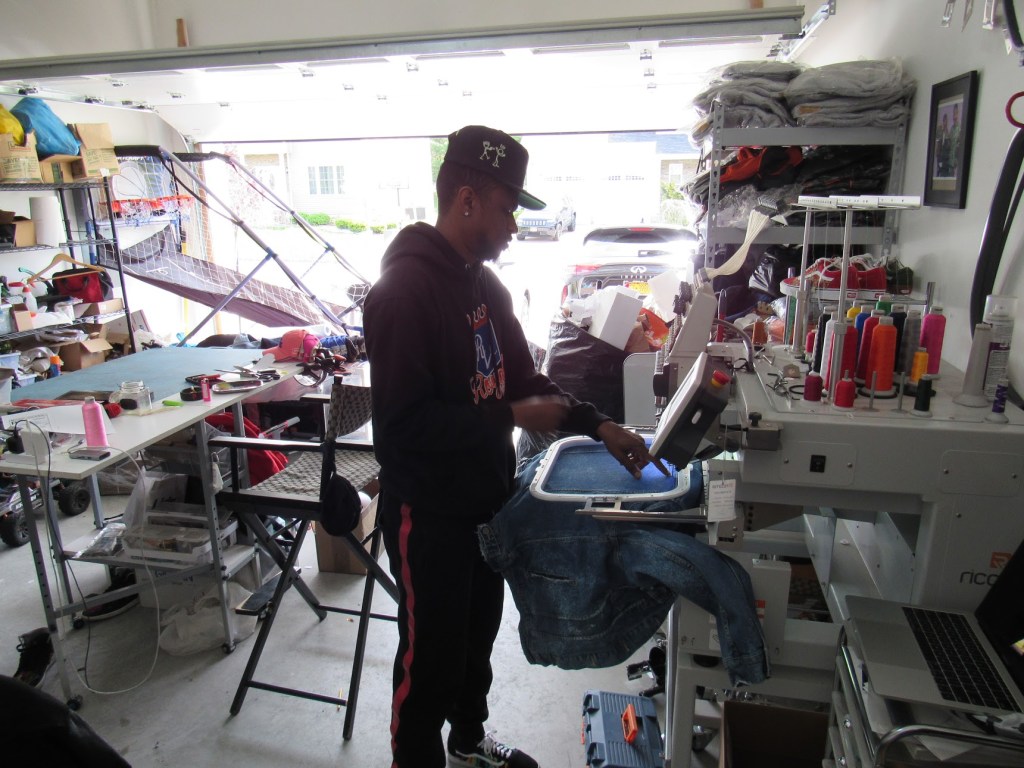
Edward Harris, a 38-year-old fashion designer, wakes up with the sun every morning to head to his office. It’s not a long journey as he makes his way down the steps of his home to his garage. The two-car garage is his factory with walls lined with mannequins, shelves with materials, and several machines where Harris spends most of his time.
A Ricoma Mt1051 embroidery machine whirs in the background while Harris works on one of his latest pieces. It’s barely 10 in the morning, but the grind never stops when you run a small business.
He’s dressed in one of his signature at-home outfits: a sweatsuit set and a Black Lives Matter snapback, all designed by himself. He gave a brief tour of the garage, which is still a work in progress after a recent move. At first glance, the room is chaos, but Harris knows exactly where everything is and that’s what matters. Of the four-walled space, two walls are lined with shelves holding all the supplies that the designer needs. The wall to the rear of the garage is where his sewing and shoe cobbler machines are as well as over 20 pairs of sneakers that he’s designed. The fourth wall is his garage door, which remains open to let the Sunday morning air into the room.
He isn’t self-conscious about the boxes of newly delivered products, spare threads, and fabric scraps scattered across the floor. “This is what it is,” he said. Fashion is messy, this is just his reality.
Harris’s fashion journey began in elementary school where he began to personalize his store-bought clothing with paint and tie-dye.
“I always wanted to be different and stand out from the rest,” Harris said.
What started as a personal project began to quickly spread when his friends would ask him to personalize their clothing as well. He saw his potential even at that young age and decided to take his fashion to the next level by creating his own designs.
Harris was inspired by his late grandmother to expand his hobby when she taught him to sew in his early teens.
As a child, Harris wanted to be a basketball player and couldn’t have imagined that life would take him down this path.
Harris’s hustle could be considered a natural result of his upbringing. The oldest of six and the son of a maintenance worker and housekeeper, having a strong work ethic is something he learned from his family. He was born and raised in Harlem – a predominantly black community in New York City, and he says his community has had a big impact on his fashion.
“Well, Harlem is the mecca of fashion,” Harris said. “Every day you come out of your house, people from Harlem dress to impress.”
The culture of friendly competition and trying to outdo each other with your fashion sense is one of Harris’s biggest motivators as a designer. You can find bits of Harlem’s influence in some of his designs, including a snapback with the words “Harlem World” and a globe embroidered on the front.
Harris’s fashion line Royal Vision Apparel was established in 2005, trademarked in 2013, and is all about catering to his clients while maintaining his own unique style. His signature Royal Vision Apparel logo can be found on most pieces, but Harris prides himself in catering to customers by bringing their visions to life on jackets, sneakers, keychains – truly anything the customer wants.
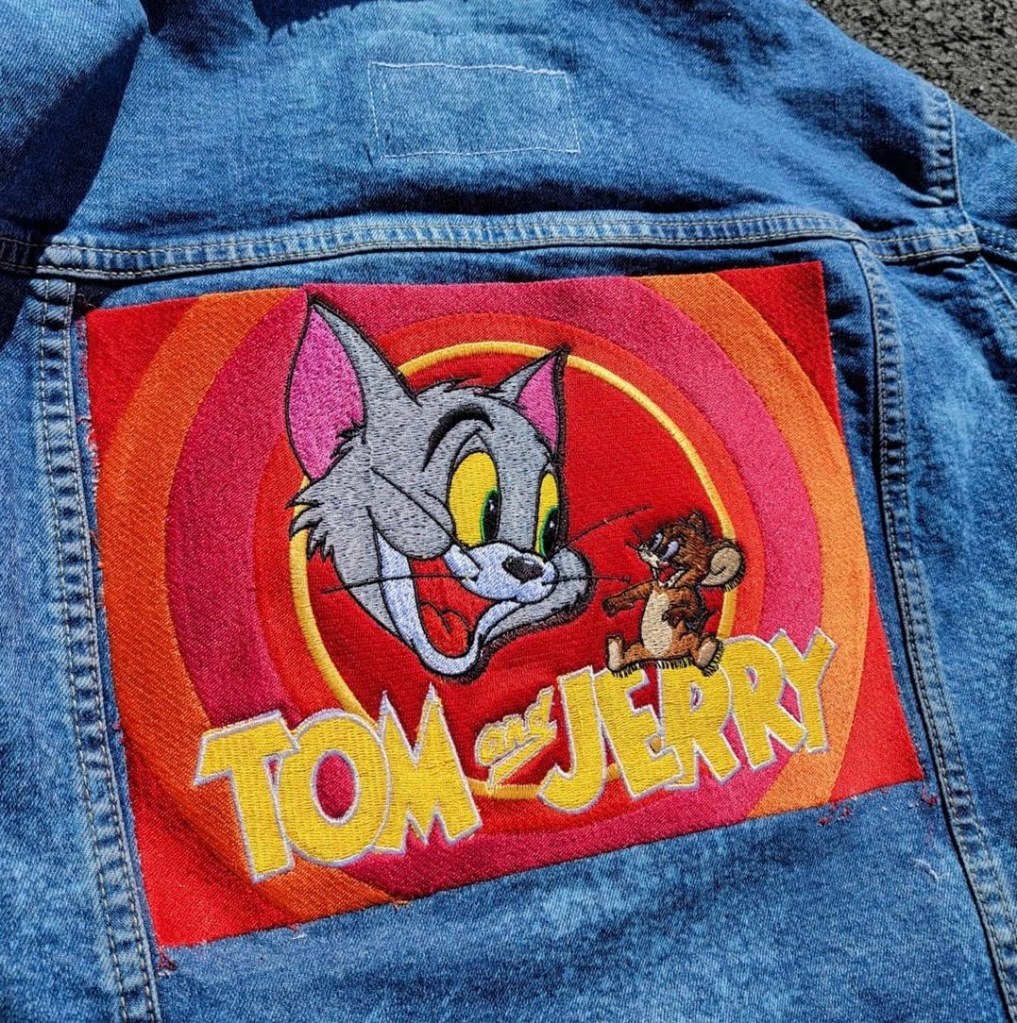
“I think that makes me stand out from other designers.”
The line started as a 100% sustainable clothing brand and Harris still keeps sustainability as one of his top goals. Harris upcycles and flips clothing from thrift shops by combining them with designer textiles. Even when a client has a specific idea in mind for a piece such as a custom pair of sneakers or denim jacket, Harris is more than willing to take an old item and bring it back to life as a one-of-a-kind piece.
“It keeps me in the realm of being environmentally conscious.”
What started as a one-man show is now a family business. Harris’s younger brother Jamal assists with most clothing designs, models clothing, and handles the city business when Harris cannot. Harris’s wife and daughter also model the women and children’s clothing, and they take turns being the camerawoman behind some of Harris’s social media posts.
His favorite part about being a designer is the kind of creativity and flexibility it affords him. Owning his own business and being able to make his own clothing means that he can make anything he wants.
“I can get out of bed with an idea in my mind and I can go downstairs and turn that idea into reality,” Harris said. “That’s one of the best things.”
Working from home does have its downfalls with family distractions, so Harris keeps himself on a productive schedule with weekly goals as if he were working for someone else. Having a family has had a big impact on his work and great time management is his key to keeping on track, but that sometimes means spending many late nights in his office completing orders. While trying to be productive, Harris prioritizes self-care by taking breaks to give his family the attention it needs.
“It’s nothing bad, just life, but having a kid is your priority,” Harris said. “That’s the beauty of working from home.”
Harris describes fashion as the simplest way someone could express their mind, their attitude – anything about themselves.
“Fashion is your expression,” Harris said. “There’s a wide variety of fashion.”
The mission of his brand stands loud and clear on its website: Harris wants his clients to feel like their best selves when wearing his designs. “Your fashion sense should add a feeling of royalty when you step out on the town. When you’re royal, people follow your style and respect your vision.”
Harris chooses to express himself with bright colors and different patterns, and he can rarely be seen wearing anything other than his street-style brand.
“My personal style is different, unique, personal. My style involves a lot of colors, some people would say it’s loud.”
As with most small businesses, the coronavirus had a large impact on Royal Vision Apparel. With the virus causing plenty of businesses to close, a lot of creators relied on their small businesses to keep them afloat. Besides being a designer, Harris is also a healthcare worker and had to juggle his full-time job at a hospital with the pandemic’s demand on his businesses.
“I was producing custom masks at the beginning of the pandemic and those were in high demand, so sales were good.”
Despite the success of his business, Harris still reflects on all the small businesses that weren’t able to survive the pandemic. Masks weren’t originally something Harris would sell, but he got ahead of the pack by selling them early into the state shutdowns before masks became mandatory for everyone.
What once started as a hobby has now become a second full-time job for the designer, but the shutdowns helped him find an escape from the work. His quarantine hobbies include collecting and customizing radio-controlled cars and playing basketball with his 10-year-old daughter and neighbors.
“I try to be a little active,” he said.
Harris’s aura is calm and collected, even after noticing a huge mistake on the piece he’s been embroidering for the past half hour. He has to start over and moves to his porch to tear all the new threads out.
“It happens,” he says. “You’ve just got to start over.”
He’ll have to take the piece off the embroidery machine one more time, tear the threads out, and start all over again before the design is exactly to his liking – being a perfectionist is part of the job.
Running his own business means that Harris is almost always on the go, so our at-home interview had to move to his car while he drove to the city to pick up more supplies. The embroidery machine is still running even as we load ourselves into the car. By the time he gets back home, the design should be perfect.
The past year has brought Harris more success than he could have expected during a global pandemic and he’s been very reflective on his journey over the years.
When it comes to setbacks, Harris has had plenty of them. In general, Harris says that setbacks with dealing with competitors and doubting yourself are all a part of the journey. He’s experienced his biggest setbacks over the years while learning how to navigate the business.
“If you don’t have any setbacks on your journey then you haven’t seen anything about business. “
Recently, Harris’s Instagram account, which had over 12 thousand followers, was deleted by the platform. With business taking off during the pandemic, losing his primary platform was the last thing he needed. The loss sent him back for a few days while he tried to regain access to the account but, in the end, Harris decided to take the loss as an opportunity to start over. His new account may not have as many followers as the old one, but Harris is now able to keep up better engagement with his audience.
At the start of his career, the fashion industry looked a lot different than it does now. When starting his line, Harris’s biggest fear was that people wouldn’t gravitate towards his style and image. The fashion industry wasn’t as accepting of designers of color 10 to 15 years ago unless they were already established in the community. At the start of his career, Harris didn’t have many designers that looked like himself to look up to. It was hard for him to get into the fashion world without this kind of representation.
According to Harris, the influence of hip-hop and big-name celebrities like Kanye West have made the industry much better for designers of color.
“A lot of high-end brands like Gucci and Louis Vuitton look to urban – what they say is “urban”, but they really mean Black – fashion for guidance,” Harris said. “There’s a greater amount of Black designers now.”
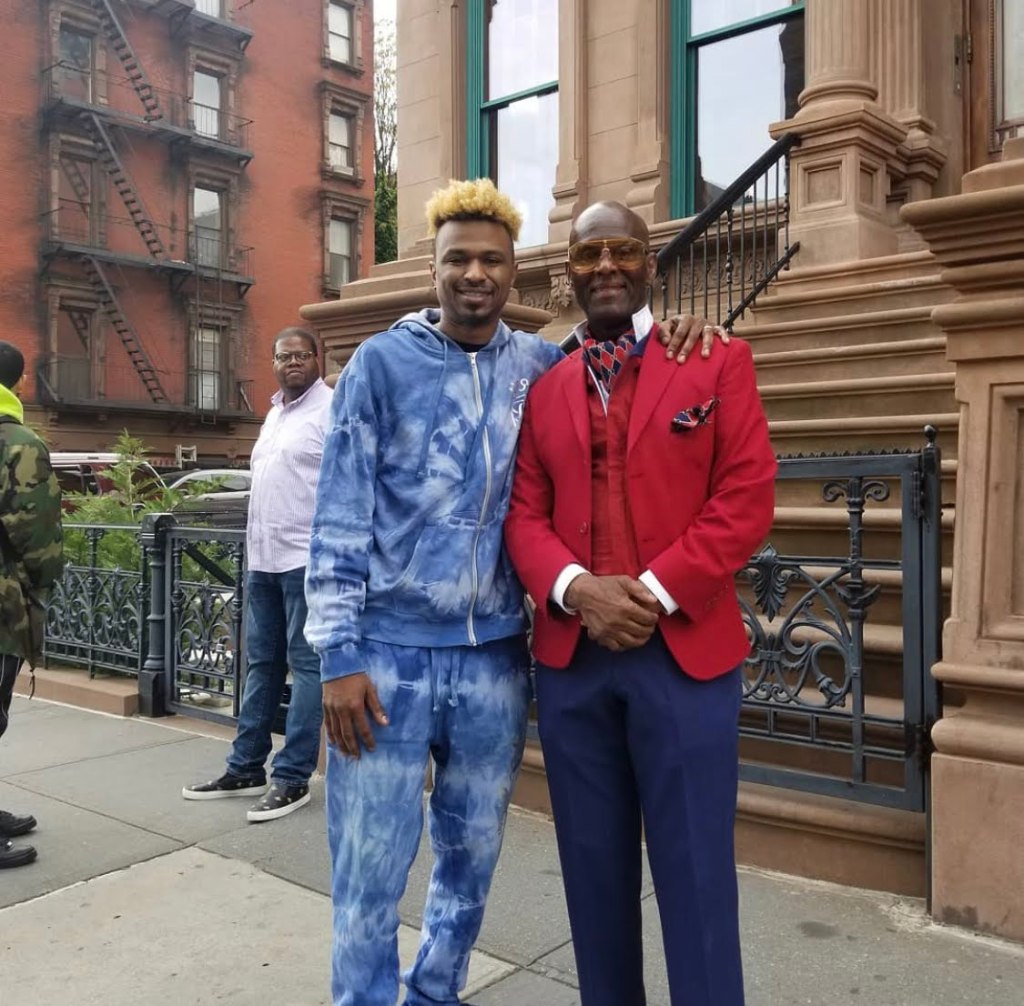
Even Harris’s greatest role model, Dapper Dan, struggled to become a designer. Dan’s career with clothing spans back to the 1970s in Harlem, but he didn’t gain mainstream success until 2017 when Gucci’s creative director, Alessandro Michele, designed a jacket based on a well-known Dapper Dan design from 1989. Dan didn’t even receive credit for the design from Gucci until there was a public backlash.
Harris has said that Dan has given him the most guidance over the years and some of the elder designer’s style can be seen in Harris’s own work.
Harris also turns to other local designers that he’s connected with on social media for inspiration. Harris thinks that social media is fashion in its own way because it allows designers from all over the world to connect with each other. Designers that once used commercials and magazine articles to announce new lines now use social media posts, and trends now become what they are because of fashion blogs. The ability to adapt and maintain his social media presence is something that Harris prides himself on.
While most designers try to remain anonymous entities behind their brands – a la The Wizard of Oz hiding behind his curtain, felt but never seen – Harris stands front and center as the face of Royal Vision Apparel. Even on the brand’s website, you’re immediately greeted by pictures of him wearing his latest designs.
So, what’s next for Harris and Royal Vision Apparel? Harris plans on growing the brand, getting more machines, trying to increase his production levels, and providing more services for other designers.
The journey has been a long and hard one with many bumps along the way, but Harris is proud of who he’s become and what he’s accomplished. If he could go back to tell his younger self one thing before beginning this career, Harris makes it simple: “It don’t happen overnight.”
 Aliyah and Words