Introduction
“Lock up your libraries if you like; but there is no gate, no lock, no bolt that you can set upon the freedom of my mind.”
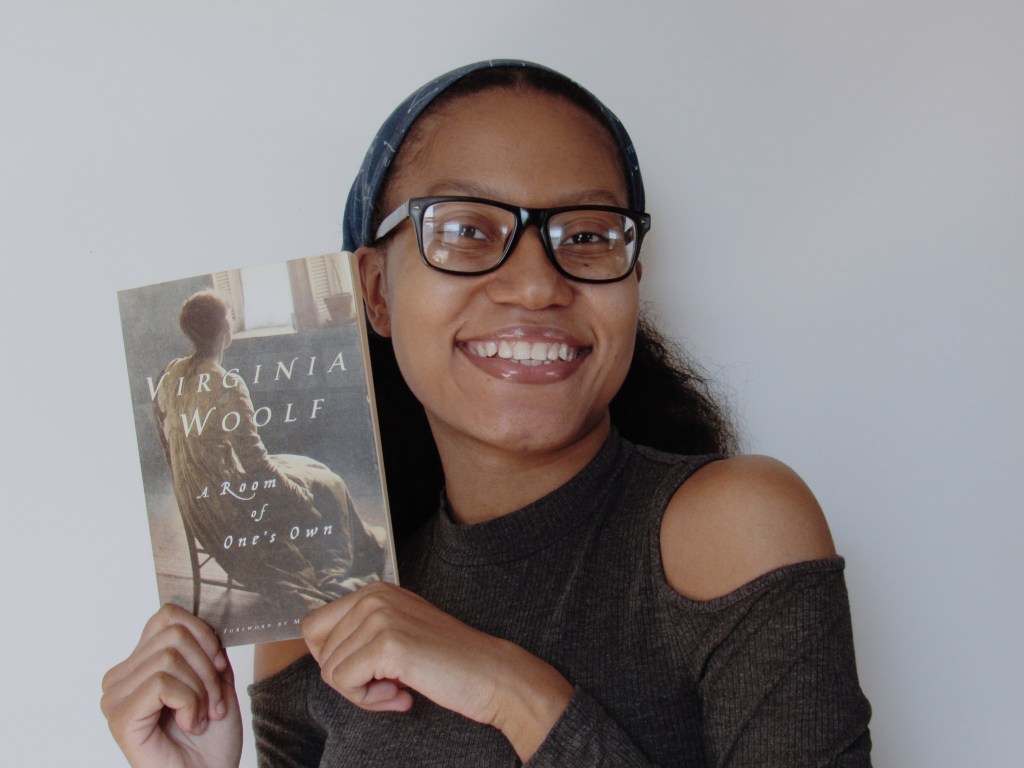
A Room of One’s Own is an extended essay by Virginia Woolf. First published on the 24th of October, 1929, the essay was based on a series of lectures she delivered at Newnham College and Girton College, two women’s colleges at Cambridge University in October 1928. While this extended essay in fact employs a fictional narrator and narrative to explore women both as writers and characters in fiction, the manuscript for the delivery of the series of lectures, titled Women and Fiction, and hence the essay, are considered nonfiction. The essay is seen as a feminist text, and is noted in its argument for both a literal and figural space for women writers within a literary tradition dominated by patriarchy.
My Thoughts
I read this book in two days thanks to a free audio version I found on Youtube. The Bell Jar really held me back so I had no choice but to demolish this book to get back on my reading schedule. The only thing I’ve ever read by Woolf in the past was Mrs. Dalloway and I decided to never read a stream of consciousness narrative again. This book wasn’t a hard read but I definitely had to re-read some pages despite the audio in my ears because Woolf’s way of writing just went on and on and on….
Where to even start with these essays? In simple terms: Virginia Woolf was spitting some heat during these lectures. It’s easy to lose the message in her elaborate scenarios and metaphors, to get lost in her own train of thought, but the point remains: women and fiction will always be an unsolvable problem so long as we exist in a patriarchal society. At first, Woolf plainly states that women need a room of one’s own in order to write fiction – hence the name of the novel – but as she continues analyze the topic of this lecture throughout the sections, the conundrum of women and fiction becomes more unsolvable – the problem expands to show that it’s much more than simply owning one’s own money and space.
I’ll be discussing feminist literary theory in my senior seminar class in a few weeks and I cannot wait to bring this book up because Woolf was really writing some gems. I couldn’t help but notice her name dropping: Aphra Behn (whom I learned about in my freshman year Theater class), Jane Austen, Charlotte and Emily Brontë, and George Eliot are just a few that she sprinkled into her lectures.
I didn’t even consider the plight of middle class woman who wanted to write in their time until Woolf began to discuss it. I owe a debt to women who decided to embrace writing as a study rather than as a frivolity. All good novels written by women that I’ve read (Emma, Jane Eyre, etc.) were written by women with little life experience- because society chose not to afford them any – and women so poor they couldn’t afford to buy all the paper they needed for their books at once.
When discussing women writers and comparing them to their male counterparts, Woolf says “they write as women write, not as men write”. It’s such a simple statement but it made me think of all the twitter, Instagram, and tiktok posts I’ve seen by female book readers that wonder if we – as women readers – actually like men or do we like the version of men that’s written by women (the men in any of the books by Leigh Bardugo, Cassandra Clare, Sarah J. Mass – the list goes on).
I think I would’ve loved to hear her give this lecture. The book started off slow and I found myself not enjoying it much at certain parts but her message over all resonated with me. I’m grateful to be an aspiring writer in the position that she so firmly advocated for. Analyzing a woman’s place in the world of literature was a great way to top off women’s history month because this is a topic so dear to me. I also appreciated her connection between poverty and achievement. I think a lot more people would accomplish their wildest dreams if they just had the financial freedom to explore their desires – I truly hope I can be like that some day.
Rating
Overall, I give the book four stars. It’s extremely well written and thought provoking, but it’s not comparable to my other five-star reads. I think I read this more as a formality, as a great way to follow up Plath, rather than as something for pleasure.
 Aliyah and Words