Introduction
“I also remembered Buddy Willard saying in a sinister, knowing way that after I had children I would feel differently, I wouldn’t want to write poems any more. So I began to think maybe it was true that when you were married and had children it was like being brainwashed, and afterward you went about numb as a slave in some private, totalitarian state. ”
The Bell Jar chronicles the crack-up of Esther Greenwood: brilliant, beautiful, enormously talented, and successful, but slowly going under—maybe for the last time. Sylvia Plath masterfully draws the reader into Esther’s breakdown with such intensity that Esther’s insanity becomes completely real and even rational, as probable and accessible an experience as going to the movies. Such deep penetration into the dark and harrowing corners of the psyche is an extraordinary accomplishment and has made The Bell Jar a haunting American classic.
My Thoughts
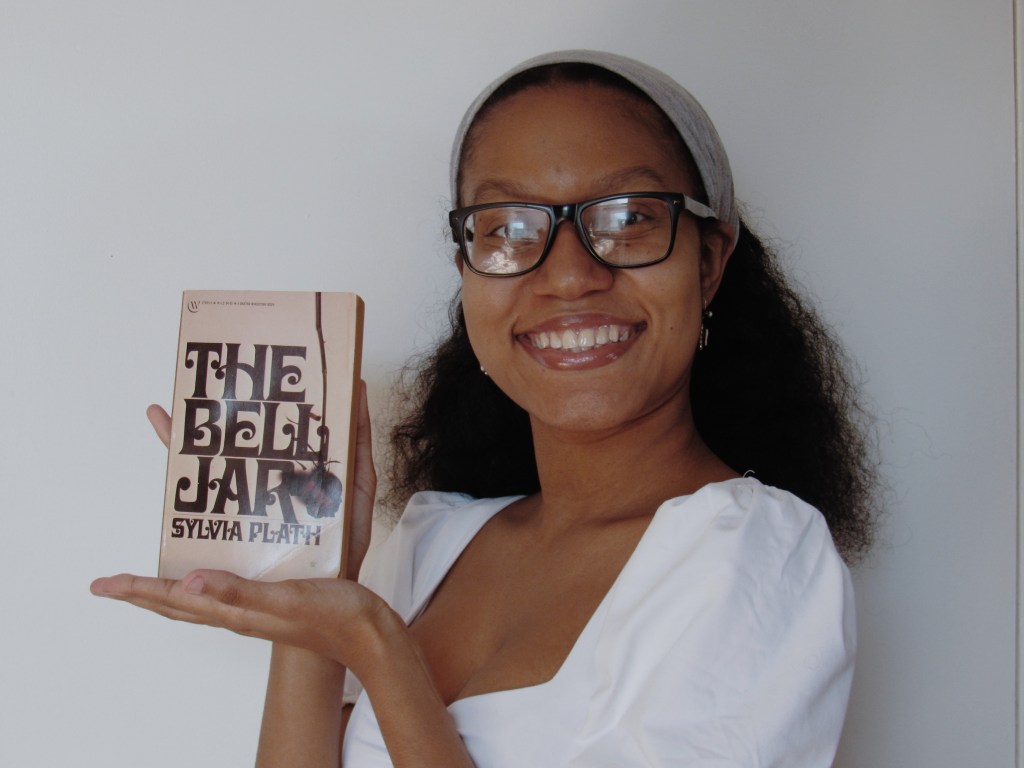
I am not at all surprised that I was not able to finish this book on time. Normally I give myself a week to finish a book in order to stick to my Goodreads reading goal (with two weeks allotted out of the year for a severely thick book or series) and The Bell Jar is the first book of the year that I wasn’t able to finish in a week. I intended on finishing this book by March 22nd but I didn’t finish until the 27th!
It shocked me how vigorously I nodded my head while agreeing to some of Esther’s thoughts. I went into this book understanding that this is essentially Sylvia’s Plath’s autobiography through this fictional character’s descent into madness but boy was she speaking the truth at some points.
This is going to be a really short review because I don’t have many thoughts (for once) about this book but I will say one thing: it was exhausting! Esther’s thoughts were just too much. I don’t think I was interested in the story at all until she was committed to a home so her mental health could improve.
It was especially jarring (since I’m currently counting down the days until I received my BA in English Lit and Journalism) reading Esther’s thoughts about her place in the world as a writer. The girl was just really depressed and I had to fight to keep the narration from dragging me down with it.
Esther embracing her future as a poet and her rejection of marriage and child birth really spoke to me. I won’t say that I identify with the character – because I certainly did not – but it really felt like I could’ve written some of these paragraphs myself because they’re exactly how I feel.
I’m glad I got to read the book because it’s been recommended to me so many times (and now I can finally say I read it) but this is not something that I will be returning to anytime soon.
Rating
Overall, I give the book four stars. I didn’t enjoy reading this at all but it had to be done. If it were not for the quality of the book and the author, I would give it three or two stars. Despite not enjoying the book, I’m giving it a high rating because I am deeply appreciative to know that I am not alone in my thoughts surrounding my writing.
 Aliyah and Words